 |
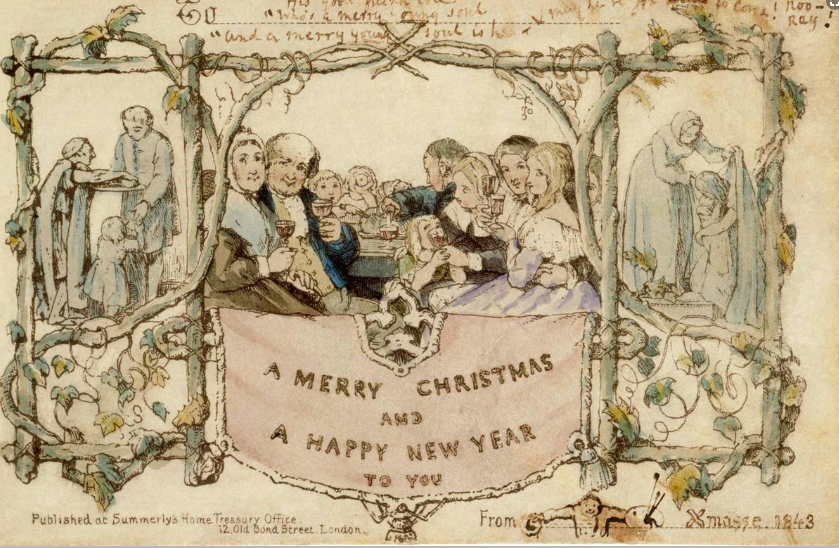
| The first commercially produced Christmas card - 1843 In Old English, the word merry was used to describe anything enjoyable or likable: Robin Hood and his 'merry men', for example |
It has been associated with Christmas since the 1500s. The first known use was thought to be in a letter from Bishop Fisher of Rochester to Thomas Cromwell in 1534:
"And this our Lord God send you a merry Christmas, and a comfortable, to your heart’s desire."
In 2022, researchers at Worcester Cathedral claimed that their bishop, Charles Booth, got his seasonal greeting ("merry this Christmas") fourteen years earlier.
 |
| 1520: letter from Bishop Charles Booth first known use of 'merry...Christmas' |
Getting merry at Christmas
"Merry" as a euphemism for being slightly or good-humoredly drunk was already established in Middle English. Perhaps the bishops were alluding to ecclesiastic high jinks around the punch bowl?
By the 19th century, the phrase 'Merry Christmas' was also central to the Wassailing tradition. This was when a crowd of 'merry' villagers (think Robin's men but drunk and belligerent) would pitch up at the local manor house and serenade the squire:
We wish you a merry Christmas
And a happy new year
Good tidings we bring
To you and your kin
We wish you a merry Christmas
And a happy new year
Now we all like figgy pudding
So bring some out here
Subtext: Nice house, squire. Be a shame if it were to catch fire