Posts

How did A Christmas Carol change the English language?

Image
A Christmas Carol  (1843) has been one of the most influential novels every written. In Stave One alone there are many of the most memorable words, phrases and idioms into the English language .  Bah Humbug!   interjection . An exclamation of irritation or disgust.  Dead as doornail  - obviously/conclusively dead. Ghost of Christmas Past :   noun.   A person or thing from a past you might choose to forget  Gruel  - a thin liquid food of oatmeal - used to refer to cheap/poor food.  Scrooge:   noun . Someone with cold/mean/miserly attitude. Also someone who transforms from bad to good. Tight fisted  - ungenerous  Famous quotations A Christmas Carol is also one of the most widely quoted texts in literature. Here are some widely used examples from the opening description of Scrooge: Marley was dead, to begin with … Old Marley was as dead as a doornail. Oh! but he was …tight -fisted The cold within him froze his old...

Where does the word nativity come from?

Image
Nativity derives from the Latin 'natal' meaning birth. 

Most quoted lines from films?

Image

Silver Spoons?

Image
Why does being ' born with a silver spoon in your mouth ' suggest inherited wealth and privilege? Apostle spoons were a symbol of wealth

What is 'the House' in American politics?

Image
The American political system has three centres of power. These are the President and the two chambers in the American Congress the -  Senate  and the  House of Representatives .  'The House' - also sometimes known simply as Congress - is the bigger body. This is because multiple congressmen are elected at a local level while the Senate is restricted to a hundred members. Two senators are elected from each of the fifty US states.  Though individual states vary substantially in population size, each has equal representation. The intention of the founders was to ensure that the larger states did not dominate the legislature. Who makes the law? All laws must originate in Congress. They the must pass up through the Senate and then be approved by the President. This is to ensure that legislation comes directly from local representatives, though the increasing use of presidential 'executive orders'  has been controversial in this regard. The legality of any...

What is a swing state?

Image
The electoral college system ensures that even though US presidential elections are national, the vote is decided by counting the number of delegates from each state.

What is the Electoral College?

Image
What is the electoral college? US presidential elections are not decided by  the  popular vote  (counting the number of votes obtained nationally for each candidate).  Each voter  votes for a state representative to allocate a vote for the president and vice president in what is called an  electoral college . Delegates States send delegates to the electoral college according to the state vote - with 48 out of 50 using a 'winner takes all system'. Only in Maine and Nebraska are the delegates allocated proportionally. The number of delegates sent to the electoral college is allocated according to the population of the state. Thus the largest delegations come from the most populous states: New York, California and Texas. What is a swing state?

What is the Union Jack?

Image
The Union Jack is technically a maritime flag, used to distinguish British ships. It is also popularly used to describe the the flag of the United Kingdom. The flag is composed of symbols of the constituent parts of the UK. The red cross at the centre is the cross of St George representing England. The blue Saltire flag is for Scotland, the red dragon Wales and the crown over the red cross is for Northern Ireland UK? So why Team GB? The Olympics brings to the surface the confusion created by the terms Great Britain and the United Kingdom. Great Britain should only really refer to the core island of Britain, not the outlying islands or Northern Ireland. It would, therefore, be more logical to have a team UK. Uncertainty is also evident in the use of flags, anthems and other national emblems. Football supporters, for example, associate God Save the Queen with the England team, despite it being the national anthem for the entire kingdom. The confusion comes from the UK unusually ...

What is Iconoclasm?

Image
  The word  Iconoclasm  has its origin in  A dispute over the use of religious images (icons) in the Byzantine Empire in the 8th and 9th centuries.  

What is a word?

Image
Dictionaries  struggle to precisely define the nature of their core commodity.

What is a blackguard?

Image
noun a  rude or unscrupulous person who   behaves  in a  dishonourable  or  contemptible  way. One of the characteristics of Hiberno (Irish) English is that there are many words commonly used in speech that are archaic in standard British English.

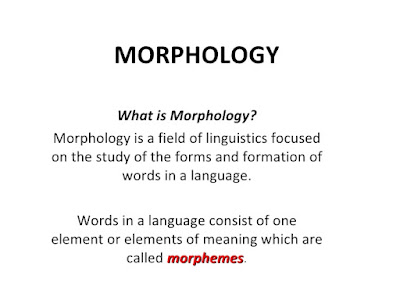
What is morphology?

Image
Source

Are rare languages simpler?

Image
  Languages spoken by smaller populations tend to employ more complex inflectional systems than  languages spoken by larger populations.

Where does the word tycoon come from?

Image
Tycoon  is usually translated into English as "great lord".

What is figgy pudding?

Image
We want some figgy pudding So bring it right here! Figgy or fig pudding is a generic term covering a number of medieval dishes served at Christmas. These could be sweet or savory and usually included figs,  honey seasonal fruits and nuts. Later, figs were often omitted while large measures of rum or other distilled alcohol became obligatory We Wish You a Merry Christmas Figgy pudding has entered popular culture via the carol. This originated in the west of England and was revived in the Edwardian period by composer, conductor and organist Arthur Warrell (1883-1939).  We Wish You a Merry Christmas is from the wassailing tradition, where villagers visit the gentry demanding ale to celebrate the season.  This combines jollity with a  barely concealed menace hinted at in the words: We won’t go until we get some So bring it out here! Doubtless Mr Warrell played down the drunken rudeness in his five part madrigal version for the University of Bistol....

How We Learn Language?

Image
Are we born with the capacity to speak a language? Or do we learn exclusively through imitation? This is a quick guide to three key theories Behaviourism Sees language as the product of our interaction with our environment. We learn it  like any other skill through imitation and practice. Important aspects of the theory are: reinforcement (positive and negative), repetition, small sequenced tasks and consistency.  Many educational policies are based on social interactionism  - a more nuanced variant of behaviourist theory. Social interactionism focuses on the relationship between the learner, his/her environment and the context under which learning occurs. Key Theorist : BF Skinner Key term: operant conditioning : Put crudely, rewiring the brain to offer reward for successful language acquisition. Skinner saw this as a kind of mechanical process with four elements: motivating operations, discriminative stimuli, response, and reinforcing stimuli. Strengths :  s...

Ten Dickensian eponyms?

Image
Dickens festival, Rochester. Fagin hanging with Miss Havisham & the gang  I am well aware that I am the ‘umblest person going,” said Uriah Heep, modestly . Charles Dickens, David Copperfield No novelist has been more inventive in using character names to express character traits. Ernest L. Abel identifies seventeen examples that have entered general English. These ten are perhaps the best known: Scrooge -  miserliness, anti-Christmas, bah humbug etc  Mr Micawber -  spendthrift, ludicrously optimistic ‘something will turn up’  Fagin - charming, ruthless, leader of a gang of child thieves. Miss Havisham - embittered reclusive spinster Uriah Heep - obsequious, toadying, false humility. More recently humble brag   Podsnap  - complacent jingoist who “stood very high in his own opinion” Pecksniff -  hypocritical Pickwick - amiable bon viveur, 'Pickwick paunch' Gradgrind  -  hard, ruthless businessman who reduces everything to mon...

Origin of laughable?

Image
Laughable Adjective : to inspire laughter: comically ridiculous. A variation based on laugh which evolved from the Middle English laughen, laghen